The Issue | A Solution | The Benefits | What the experts say
The Issue
[su_row]
[su_column size=”1/3″ class=”l-columns”]
[su_progress_bar percent=”80″ text=”$300 Billion” bar_color=”#A0A0A0″ fill_color=”#FB3C2D” text_color=”#FFFFFF” class=”bar”]
$300 billion
is lost every year to U.S business as a consequence of stress related disorders.1
[su_progress_bar percent=”34″ text=”$34 Billion” bar_color=”#A0A0A0″ fill_color=”#FB3C2D” text_color=”#FFFFFF” class=”bar”]
$34 billion
in productivity was lost from the Australian Economy in 2010 due to stress related illness.2
[su_progress_bar percent=”75″ text=”75%” bar_color=”#A0A0A0″ fill_color=”#FB3C2D” text_color=”#FFFFFF” class=”bar”]
75%
of medical conditions related to productivity loss can be considered stress related.3
[su_progress_bar percent=”2″ text=”6.5 Working Days per Year” bar_color=”#A0A0A0″ fill_color=”#FB3C2D” text_color=”#FFFFFF” class=”bar”]
6.5 Working Days
are lost per employee each year due to stress.2
[/su_column]
[su_column size=”1/3″ class=”middle-column”]
Higher Absenteeism
[su_progress_pie percent=”24″ pie_width=”30″ size=”110″ pie_color=”#A0A0A0″ fill_color=”#FB3C2D” text=”24%” text_size=”30″ text_color=”#000000″ class=”small-pie”]
A major study found those reporting higher stress to be 24% more likely to be absent from work more often.5
Lower Productivity
 Unproductive workers are nearly 4x more costly than absent workers.2
Poor Employee Retention
[su_progress_pie percent=”20″ pie_width=”30″ size=”110″ pie_color=”#A0A0A0″ fill_color=”#FB3C2D” text=”20%” text_size=”30″ text_color=”#000000″ class=”small-pie”]Stressed workers are more than 20% more likely to quit or be planning to quit.4
[/su_column]
[su_column size=”1/3″ class=”r-columns”]

Employee Health Issues Linked to Stress
[su_list icon=”icon: plus-circle”]
- Back, Neck & Spinal Problems
- Heart Disease
- Headaches
- Asthma
- Depression
- Eczema and other skin conditions
- High Blood Pressure
- Anxiety
- High Cholesterol
- Diabetes
[/su_list]
[/su_column]
[/su_row]
A Solution
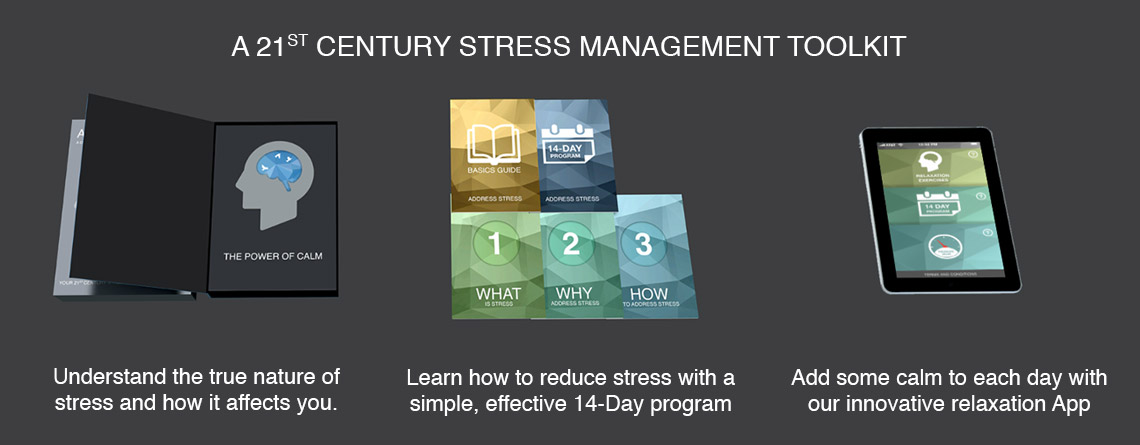
ADDRESS STRESS – BREAK THE CYCLE OF MODERN DAY STRESS.
[su_row]
[su_column size=”1/2″]
Identify the problem
- Over half of all employees surveyed admit to being overwhelmed by stress.
- This is a significant productivity and wellness issue.
Create Awareness
- Help employees and managers become aware of the issue and its consequences.
- Demystify the problem and reduce its stigma.
Educate and empower
- Educate your workforce as to the nature of the problem.
- Deliver the resources to empower change.
- An educational call to action for your staff
[/su_column]
[su_column size=”1/2″]

Innovative | Effective | Low Cost | Self-supporting
[/su_column]
[/su_row]
[su_spoiler title=”Click here to look inside” class=”mod-info”]
 [/su_spoiler]
Click here to order the Address Stress module for your staff
The Benefits
[su_row]
[su_column size=”1/2″]
Benefits to Employees
[su_list icon=”icon: star”]
- Awareness of the benefits of Addressing Stress and the dangers of ignoring it.
- Improved workplace experience.
- Learning a life skill with benefits that flow beyond the workplace.
- Avoiding the perceived stigma of having to reach out for help.
- Restoring calm, clarity and balance into daily decision making processes.
- The potential for better health and an enhanced sense of wellbeing.
[/su_list]
[/su_column]
[su_column size=”1/2″]
Benefits to Employers
[su_list icon=”icon: star”]
- A healthier, happier and more productive human capital base.
- Strong internal marketing and corporate communication message (branding opportunities).
- Stand out as an employer of choice by creating a caring workplace environment.
- Encourage better work-life balance in a more powerful and meaningful context.
- Improved employee retention.
[/su_list]
[/su_column]
[/su_row]
What the experts say.
[su_row]
[su_column size=”1/2″]
The University of South Australia analysed a broad range of stress management interventions and concluded: 6
[su_list icon=”icon: star” class=”experts”]
- Stress management initiatives were effective in reducing employee stress symptoms, improving coping responses and improving workplace performance.
- A combination of organisation level and individual focused strategies worked best.
- De-medicalised approaches were most effective.
- Providing employees with the skills and strategies to deal with stress was key to the success of these initiatives.
[/su_list]
[/su_column]
[su_column size=”1/2″]

[/su_column][/su_row]